Pages

Showing posts with label wine. Show all posts

How Merlot Takes Revenge

After going wine tasting in the Santa Ynez Valley, I finally sat down and watched Sideways, the movie that propelled central valley Pinot Noir to fame and unjustly gave a bad rap to Merlot. Do you like Bordeaux? Do you know that Merlot is one of the primary grapes that go into Bordeaux?

Finally, Merlot producers and other wine professionals decided things have to turn around. Well, there's only one way to do that, I suppose: let consumers try high quality Merlot.
Ian Blackburn of Learn About Wine organized a Merlot-centric wine event humorously called Revenge of the Merlot.

The event was held at the Elevate Lounge. While the main event was at night, I was invited to attend the "trade tasting" during the afternoon. Twenty nine wineries/importers were in attendance showcasing their wines, totaling more than fifty wines.

Despite its bad reputation in the movie, Merlot is the third most planted grape variety in the world with 640,000 acres to its name. The name Merlot came from the Occitan word meaning "young blackbird."

I was fortunate enough to attend the panel tasting, thanks to LAW & SauceLA's press invitation.
The seven wines we tasted were from:
1. 2006 Merlot, Gundlach Bundschu, Sonoma (~$30). Presented by Jeff Bundschu.
This wine had a sharp smell, but a fruity taste, medium body, and actually goes down pretty smoothly.
2. 2005 (Merlot w/ 15% Cab-Franc), Newton, Napa Valley. Presented by their winemaker, Chris Millard.
Mellower and earthier aroma than #1 but was actually more tannic. Richer and fruity, and the sharp tannins don't really linger.
3. 2006 Merlot from Carneros Valley, Silverado, Napa Valley (~$30). Presented by Russ Weiss.
Bold and darker flavors with a little herbal notes.
4. 2005 Oakville Merlot, Swanson, Napa Valley ($36). Presented by their winemaker, Chris Phelps.
5. 2007 Montes Alpha, Chile ($24). Presented by Alex Guarachi, President of TGIC Imports.
6. Cakebread Cellars, Napa Valley. Presented by Christopher Huber, VP of the Sales dept.
7. 2006 Jackson Park Merlot, Matanzas Creek, Sonoma ($49). Presented by their PR person, Joe Cicero.
Fruity, distinct spice, bright, with nice and light tannin. I enjoyed this.
Winemakers, owners, and other experts from each winery served as a panel and introduced their respective wines as discussion was led by Ian.

Oh, the panel also mentioned a new documentary about Merlot coming up, called Merlove.
(OK, cheeky title, but I'll watch it anyway).


One of the highlights for me was trying Twomey, a sister winery of Silver Oak. The main reason for my excitement was because I've tried to go to their tasting locations both in Calistoga and Healdsburg - both times on a Sunday, when they are both closed.
Twomey's Merlot is made using an old (19th century) and now rare technique called soutirage traditionnel, where the wine is never pumped.


I didn't taste all the wines available that day (I hadn't been spitting consistently) ...
Organic Cellar spotlighted a Prosecco Merlot, a refreshingly crisp sparkly. This was a nice change from all the red wines abound.

Another interesting booth is the TGIC Importers.
They had a variety of Merlots from Argentina, Chile, and more. He told me to first try the Pascual Toso 2007 Merlot from Argentina as it was to be the "most surprising," he said.
The Pascual Toso was surprisingly rich: fruity and had bright flavors. An easy wine to drink. Not a complex wine, to be sure, but if I'm looking for something in this price range (~$10) it's definitely a bottle I would consider getting. The Santa Ema Reserve Merlot from Maipo Valley, Chile was mellower, deep, and smooth.

There are certainly a lot of great Merlots around the world. Miles from Sideways may not drink any "f***ing Merlot" but he was so whiny throughout the movie anyway ... are you really going to listen to him?

The Eastside of Food Events: East LA Meets Napa

One Friday evening, Union Station is transformed into a food and wine mecca. In its fourth year, East L.A. Meets Napa event, hosted by Altamed, gathered more than 1000 people on July 10 to taste the food of more than 40 Latino restaurants around town and the wines (and tequila) by Latino wineries or winemakers throughout the state.

Some of the notable participating wineries include Sequoia Grove, J. Lohr, Cobblestone Vineyards, El Centauro del Norte, and many many more.

With plenty of food to sample, I did not manage to try everything. The restaurants everyone seemed to enjoy but I missed included Cook's Tortas, Birrieria Chalio, and Moles La Tia, but here are some of the highlights for me:

Chicken tamale with black mole from Guelaguetza.
Mole from Guelaguetza - a staple of LA. There's a reason they are popular. Here they serve up delicious chicken tamales with their sweet mole and fragrant rice.

Florales Tortillas with shrimp salsa from Rivera
One of Rivera's signatures - housemade nixtamal tortillas that are crispy and gorgeous to look at at the same time.

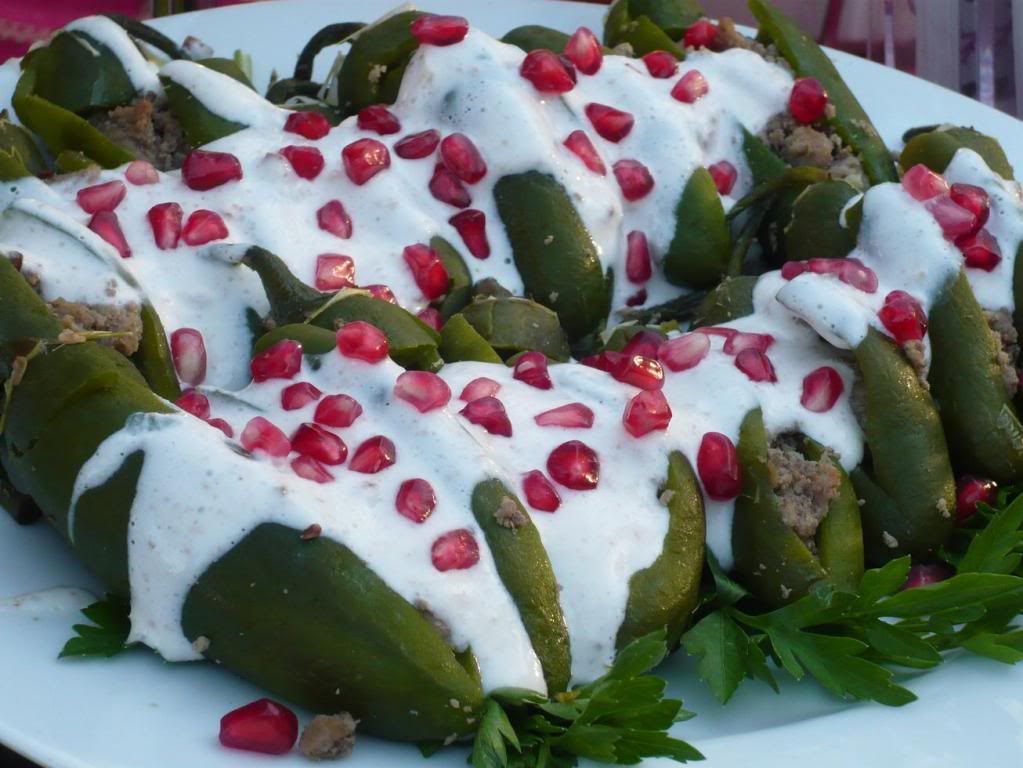
Chiles en Nogada from La Casita Mexicana
This was better in the larger version you get at the actual restaurant due to the ratio, but still enjoyable with the sweet walnut sauce.

Castillas de Puerco en Chile Negro from Teresita
Very tender and flavorful. This was a find I would not have known were it not for this event! It's really for these lesser-known places that these food events are so great for - an exposure to over 1000 people.

There were some unique desserts to be found also, including this handmade 3-D jello from Attila the Flan.
(That just looks so cool!)

Chocolate dipped jalapenos from D's Delights
I did actually try a bite - spicy! Not for me, not for me. But fun nonetheless.

I unfortunately had to run out of there after an hour to make it to my Andrew Bird concert, but in that one hour I had a lot of great food, great wines, and met many of my foodie friends including Mattatouille, LA&OC Foodie, Food She Thought, Wandering Chopsticks, FoodGPS, and Choisauce.

Save the Date! East LA Meets Napa on July 10

On July 10, some of the top Latino restaurants in Los Angeles and Latino winemakers throughout Napa will gather at Union Station. What for, you ask? Why, to wine and dine you, of course!

This marks the fourth year of East Los Angeles Meets Napa, a Latino-culture-centric food and wine event benefitting AltaMed, a health organization reaching out to the poor and uninsured population of East LA.

Participating restaurants include some that I've been to and enjoyed such as Rivera, La Casita Mexicana, Palate, Porto's Bakery, and Guelaguetza.

The rest of the 40-something restaurants include Casa de Moles La Tia (food samples pictured below), Phlight, Frida Restaurant, El Portal, Cook's Tortas and many many others.

There will of course be tons of wine, from Napa just as the name of the event suggests. But being a Latino-centric event, we won't be having any old Napa wines. Latino winemakers/vineyard-owners throughout Napa will be featured front and center at this event.
Some of the featured wines will include Karl Lawrence with winemaker Michael Trujillo, Madrigal which is a small vineyard that has been family-run for three generations, and Sequoia Grove (which Choisauce absolutely loved).

During the Press Preview held at Rivera, we also tasted some creations to be looked forward to at the actual event. The previews included samples from Rivera, Casa de Moles La Tia, and Phlight.

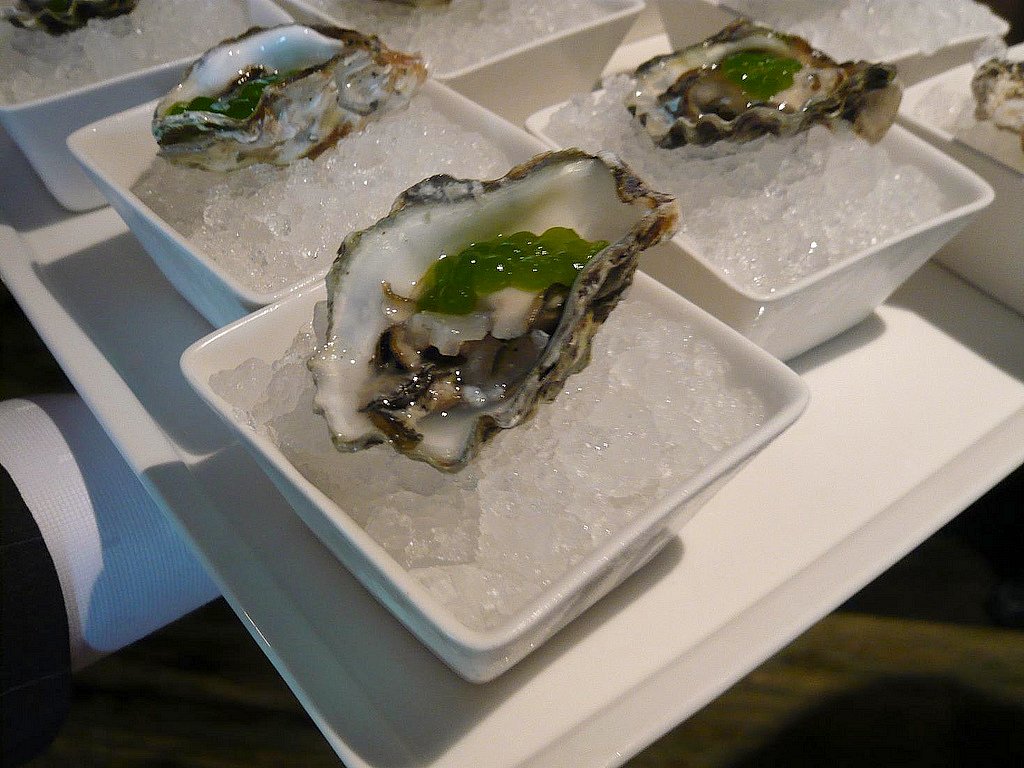
Some highlights were Rivera's Kumamoto Oysters with Cucumber Caviar (top photo on the page), Shrimp with pineapple:

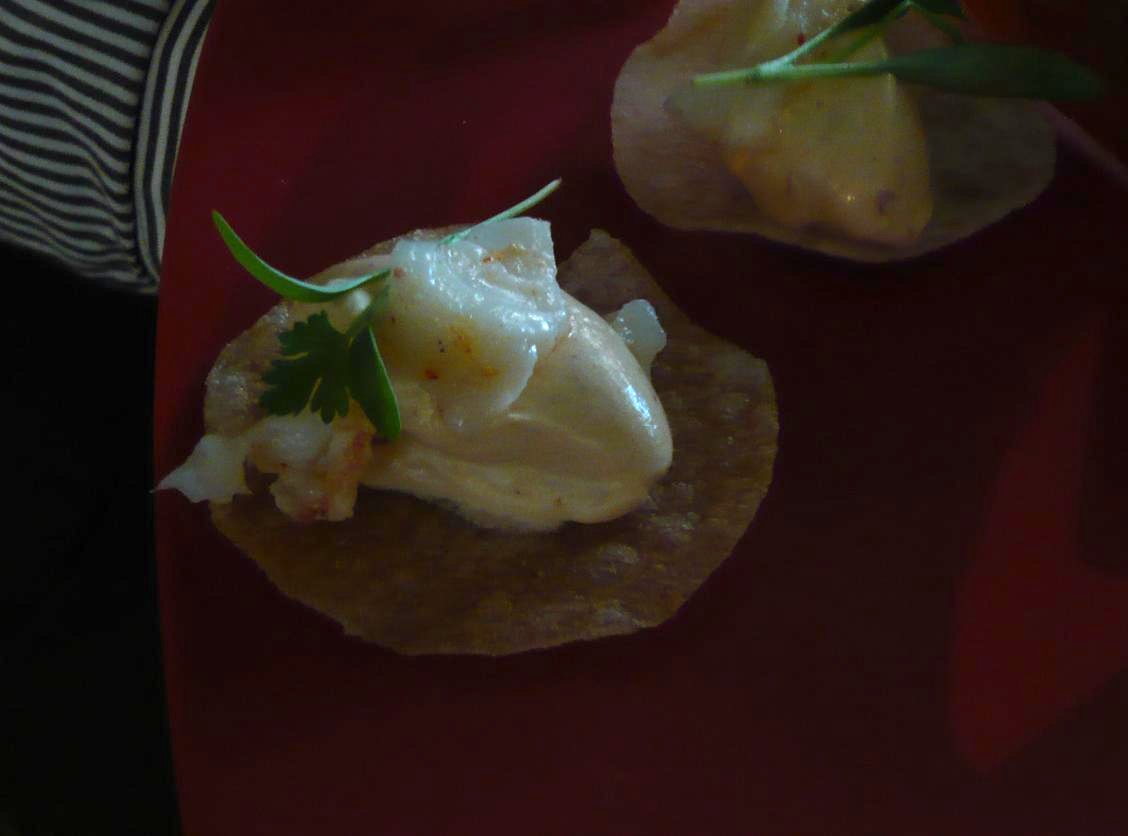
Kennebeck Potato Chips, Butter Poached Maine Lobster, Chipotle Crema

For the press preview, we ended with the Mexico City Sundae from Rivera - ice cream with habanero and caramel. Bold and delicious is how I would describe this spicy yet cool and refreshing dessert. One can only hope they will serve it at the event ... and at the restaurant.

The event will take place on Friday July 10, 6-9 PM at the Union Station (800 N. Alameda Street, Los Angeles, CA)
Tickets are $125 and can be purchased here.

WineMaking 102: The Press!

If you had tried making your own wine up to 101, then you should have a bucket of fermenting grape+grape juice. The juice is what you want, and you want lots of it without the solid stuff - grape skin, seed, etc. So, you press. You should press when the sugar level of your fermenting grape juice has gone down to basically zero.

The basic concept that wine presses operate under is the same as it was more than 1000 years ago. This one is an old and simple wine press, consisting of a cylinder to contain your grapes and a ratchet.
The liquid will escape through the gaps on the cyliner and down the spout.

So first you dump everything, juice, skin, and all, into the cylinder.
At this point you will capture all the liquids into buckets and pour them into gallon glass bottles to further ferment it for a few months before you bottle them.

Now that you have all the grape skin, seeds, etc, which still contains tons of delicious future-wine grape juices, you need to press the liquid out of them. We stack blocks of wood on top of the grapes - because of this the press will not work as well if you have too little stuff to work with.
The blocks need to reach high enough for the ratchet to press down on.
Swing the ratchet until it clicks and basically you do this back and forth until it clicks for many many times. Until you get all the grape juice out.

Again, you store your fermenting grape juice in big glass bottles. It is important to fill them up as much as you can. You will cover them, usually with plastic, to keep them airtight. If they're not full they will have too much air for the fermentation to work properly - and also may induce bacterial growth (= vinegar!).

So now that we were done with that part, on to the Feast! Our lunch: fried soft shell crab :D

WineMaking 101: The Harvest and Crush

Okay, kids, let's learn how to make one of the most important fluids in the world: wine!
We're talking red wine here specifically.

I started making wine 3 years ago, when my professor at UCLA asked his students if we were interested. We bought 100 pounds of Sangiovese grapes from the Home Wine, Beer, and Cheesemaking Shop which is also a great resource on equipments and brewing nutrients.

That was the last time we bought though. That year and the years following, my prof's grape vines have started to bear fruits and we've been getting grapes from those vines.
So. First step - you harvest. Before the harvest, test your grapes regularly for its brix/sugar content. High sugar content will make much better wine (higher alcohol content)- if it is too low you have to add sugar but the natural sugar is always better. The later the harvest, the sweeter the grapes will be, but you may lose quantity.

Get the grapes in bunches and throw them in a barrel. We use the big gallon trash cans - new/clean of course! Don't worry about the stems/leaves at this point - we will get rid of those later, just get as much as you can.No, you don't have to wear funny outfits like we did. The only reason for the masks was that we were having bee problems.

Next, you destem and CRUSH.
The Home Wine, Beer, and Cheese Shop has a destemmer that will do the work for you, but in our low volume backyard process, I just crush them with my feet :)
It's been a tradition!

So destem the grapes, get rid of the leaves, throw them into a big, shallow bucket. Then CLEAN FEET in, and crush crush crush.

Once everything is crushed, measure the specific density - this will tell you the sugar content. 22 brix will give you 11% alcohol - Aim for 24 brix or so. The Shop's website also has a great list for charts etc on how much sugar/water to add to correct your sugar level.

Next you add the sulfite, tartaric acid, malo-lactic, super super food (nutrients for the yeast), and also water and some yeast. Grapes will have a white coating on its skin (see photo above) which will be covered with yeast. It is better to use natural yeast, but if there is not enough yeast you will end up with vinegar, so to be safe add some yeast.
Again, there's a chart/recipe on how much to add. People will tend to modify this based on experience, but of course I cannot disclose our secret recipe :P

We put everything in our big clean trash can. After these nutrient addition, cover the top of your crushed grapes with plastic - very important to make sure everything is covered and airtight! Air will promote the growth of bacteria and give you vinegar!

Then put on the cover for your trash can and leave it to brew for a week or so. Check the specific density every day. It should go down as the yeast is brewing, and you'd want to wait until you get as close as possible to zero.

When you hit that point .... we'll talk about it next time: PRESSING!

In the meantime, you have to get on to the most important part of the harvest .... The Feast :D
Always have a feast, with wine of course, when you're done harvesting ;)

Discount Alert! Wine,Cheese&Chocolate Tasting

After meeting Ian Blackburn from LearnAboutWine during the beer tasting on Sunday, he offered to give my blog readers a special discount for the upcoming Wine, Cheese & Chocolate (!!!) tasting event on October 12.

Let's see ... I <3 wine, I <3 <3 cheese, and I <3 <3 <3 chocolates!! Can't go wrong with this event :P

This deal will get you a 20% discount off the advance registration price of $50. It's a code that you have to apply in the "Discount Code" space when you register. Just to make it harder on you, I'm putting the code at the very bottom of the post ...

Date: Oct 12, 2008 (Sunday)
Time: 3-5:30 PM
Place:
Loft 218
530 Molino St #218
Los Angeles, California 90013
(310) 451-7600


Gourmet