Pages

Showing posts with label Tofu. Show all posts

टोफू पराठा - Tofu Paratha

Tofu Paratha in English

वेळ: पिठ मळण्यासाठी: १० मिनीटे । पराठे बनवण्यासाठी: १५ मिनीटे
६ ते ७ मोठे पराठे (१० इंच प्रत्येकी)

tofu recipes, paratha recipe, tofu paratha, Parathas with Tofu,Indian Bread Recipeसाहित्य:
१५० ग्राम टोफू (मी फर्म टोफू वापरला होता) (टीप १)
१ गाजर, किसलेले
दिड ते दोन कप कणिक (टीप २)
दही (टीप ३)
१/२ कप बारीक चिरलेली कोथिंबीर
३ ते ४ हिरव्या मिरच्या, एकदम बारीक चिरून
१ टिस्पून धणेजिरे पूड
१/४ टिस्पून हळद
चिमूटभर हिंग
चवीपुरते मिठ
पराठे भाजण्यासाठी तेल (साधारण १/४ कप)

कृती:
१) टोफू हलक्या हाताने दाबून त्यातील पाणी काढून टाकावे. परातीत किंवा खोलगट भांड्यात घेऊन टोफू कुस्करून घ्यावा.
२) त्यात कणिक घालून हलकेच मिक्स करावे. नंतर किसलेलेल गाजर मिरच्या, धणेजिरेपूड, हळद, हिंग, मिठ, कोथिंबीर घालावे चांगले मळावे आणि गरजेप्रमाणे दही घालून पराठ्यासाठी कणिक मळून घ्यावी. खुप घट्ट मळू नये त्यामुळे पराठे कोरडे होवू शकतात.
३) मळलेले पिठ १० मिनीटे झाकून ठेवावे. नंतर तेलाचा हात घेऊन २ ते अडीच इंचाचे समान गोळे बनवावे. तवा गरम करावा. कोरडी कणिक लावून पराठे लाटावेत आणि मध्यम आचेवर पराठे भाजून घ्यावेत. पराठे भाजताना कडेने थोडे तेल किंवा बटर घालावे त्यामुळे खमंग स्वाद येतो आणि पराठे मऊ राहतात.

टीप:
१) या पराठ्यांसाठी फर्म टोफू किंवा सिल्कन टोफू, कोणताही प्रकार वापरला तरी चालेल. घरी फर्म टोफू अव्हेलेबल होता म्हणून मी तोच वापरला. सिल्कन टोफू टेक्श्चरला एकदम मऊसूत असतो. म्हणून जर तुम्ही पराठे बनवण्यासाठी खास टोफू आणणार असाल तर शक्यतो सिल्कन टोफू आणा.
२) दही, टोफू यांच्यातील पाण्याच्या अंशानुसार गव्हाचे पिठ थोडे कमी किंवा जास्त लागू शकते.
३) टोफूच्या टेक्श्चरवर दह्याचे प्रमाण अवलंबून आहे. वरील प्रमाणानुसार मला साधारण ३ टेस्पून दही लागले होते.
३) टोफूऐवजी पनीर वापरले तरीही छान चव येते.

Labels:
Tofu recipe, Tofu Paratha, Paratha recipe

टोफू फ्राईड राईस - Tofu Fried Rice

Tofu Fried Rice in English

२ ते ३ जणांसाठी
वेळ: ३५ मिनिटे

fried rice recipe, basil fried Rice, tofu fried rice, thai basil fried riceसाहित्य:
१ कप जस्मिन राईस
३ टेस्पून तेल
३ ते ४ मोठ्या लसूण पाकळ्या
२ हिरव्या मिरच्या
१ टिस्पून सोयासॉस
१ टिस्पून चिंचेचा कोळ
१ टिस्पून साखर
१/४ कप भोपळी मिरची (उभी चिरलेली)
१/४ कप कांदा (पातळ उभा चिरलेला)
१/२ ते ३/४ कप टोफू (१ इंच चौकोनी तुकडे)
३/४ कप बेसिलची पाने
१ लहान गाजर (चौकोनी तुकडे)
१/४ कप मटार (ऐच्छिक)
चवीपुरते मिठ

कृती:
१) जस्मिन राईस धुवून घ्यावा. दिड ते दोन कप पाणी गरम करावे त्यात थोडे मिठ घालावे. पाणी उकळले कि त्यात धुतलेला जस्मिन राईस घालून गॅस मध्यम करावा. वर झाकण ठेवून भात मोकळा शिजवून घ्यावा.
२) टोफूचे तुकडे कमी तेलावर शालोफ्राय करून घ्यावेत.
३) लसूण पाकळ्या आणि हिरव्या मिरच्या एकत्र वाटून घ्याव्यात. तेल गरम करून त्यात लसूण मिरचीचे वाटण घालून परतावे नंतर गाजराचे तुकडे घालून ३० सेकंद परतावे.
४) त्यात भोपळी मिरची, कांदा घालून फक्त १० सेकंद परतावे. कांदा आणि भोपळी मिरचीचा करकरीतपणा तसाच राहिला पाहिजे. लगेच भात, चिंचेचा कोळ, साखर, सोयासॉस आणि लागल्यास मिठ घालावे आणि निट मिक्स करावे. घातलेले जिन्नस भाताला सारखे लागले पाहिजेत.
५) भात निट मिक्स केल्यावर बेसिलची पाने आणि शालोफ्राय केलेला टोफू घालून अलगद मिक्स करावे आणि लगेच सर्व्ह करावे.

टीप:
१) टोफू घातल्यावर हलक्या हातानेच मिक्स करावे नाहीतर टोफू मोडला जातो.
२) बेसिलची पाने घातली खुप जास्तवेळ मिक्स करू नये त्यामुळे उष्णतेने ती कोमेजतात.
३) जरा वेगळी चव देण्यासाठी मी यात चिंचेचा कोळ घातला आहे, पण आपल्या आवडीप्रमाणे चिंचेच्या कोळाऐवजी अर्धा टिस्पून विनेगरही घालू शकतो. थाई फ्राईड राईसमध्ये खरंतर फिशसॉस वापरतात. फिशसॉसला थोडी आंबटसर चव असते. नॉनवेज लोकांनी चिंच, विनेगर ऐवजी फिशसॉस वापरला तरीही हरकत नाही.
४) जस्मिन राईस नेहमीच्या भातापेक्षा जड असतो आणि पटकन पोटही भरते त्यामुळे त्या अंदाजाने भात शिजवावा.

Labels:
Tofu Fried Rice, Basil Fried Rice, Vegetarian Fried Rice

More LateNight Westside Option: Tokyo Table

OK, so Tokyo Table is kind of a chain. But I've been going there quite a bit that I figured I should blog about it. Not only are they open later at night than most places, the food they serve is pretty solid and the prices quite reasonable. Late at night (though not *too* late) during the weekdays when I used to be stuck with burgers or Denny's, now I may be able to get something healthier.

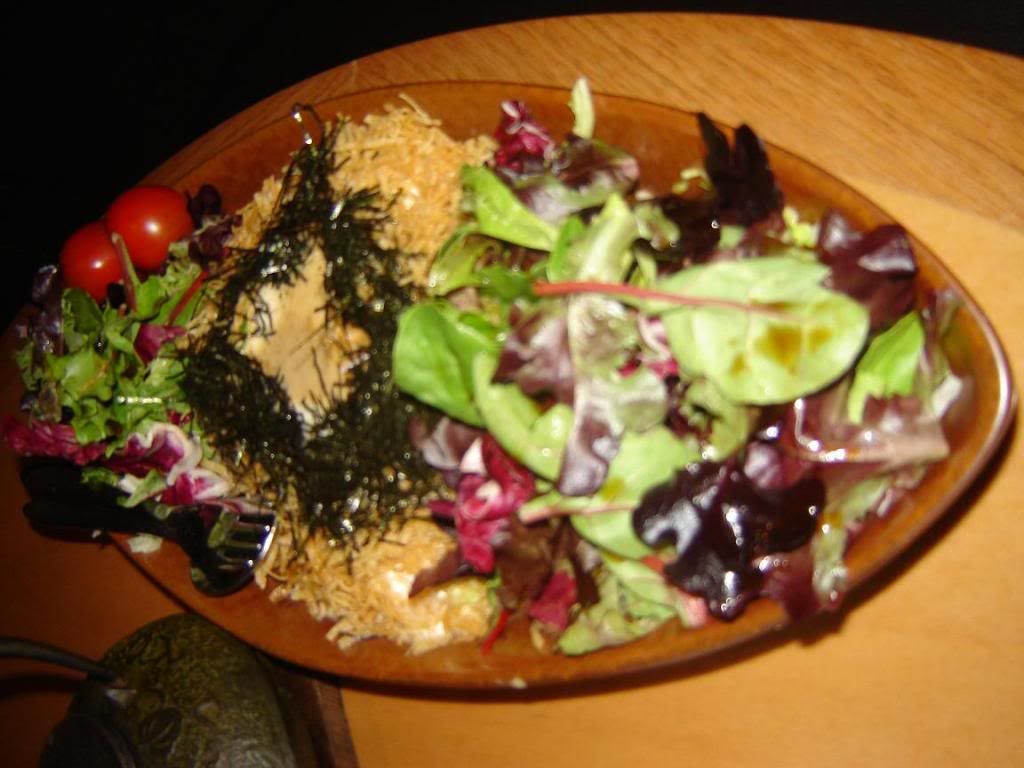
I've been back quite a few times just to get their Tofu salad ($8.95)- when I'm craving tofu and something healthy-ish.Their tofu is homemade and is pretty good and smooth. The tofu salad is served with sesame dressing, which can be a bit salty so mix your salads carefully. I love eating the tofu with the crispy wontons and nori and the greens. The texture play is fun and the sesame dressing brings the different flavors together.

Tokyo Table offers various sushi rolls, your typical ones such as rainbow roll etc, and some more 'interesting' ones. Below is the Cohiba roll ($11.95) which is just California roll wrapped with salmon with ginger sauce.
I don't have much to say for sushi rolls in general. These were good, nothing special.


They also have a couple of Ishiyaki (hot stone bowl). Pictured below is the Unagi rice ishiyaki ($9.95).
I like eating the burnt rice from the sides of the bowl at the end :P. I've also had the garlic shrimp rice ishiyaki -- WARNING: very, very garlicky.

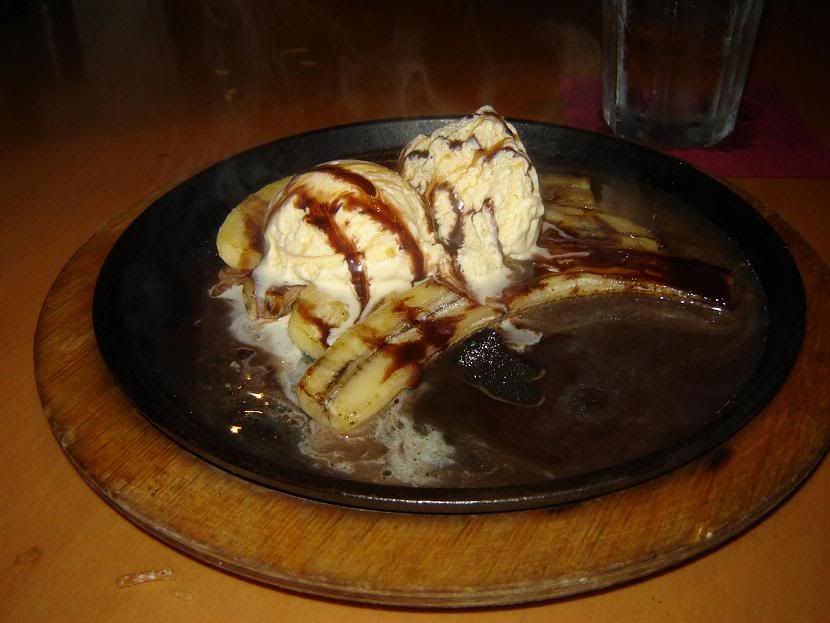
We usually like getting the Banana Flambe ($7.95) for dessert - since it's not too heavy and it's also fun watching it sizzle :P (what? I'm easily entertained)

Their most famous dessert is their Honey Toasts (Original $6.95, Chocolate etc $7.95)
It's just honeyed toast, the inside is diced up into small cubes and then toasted, making each cube nicely crispy. It makes for a nice breakfast too the next morning :P

The Beverly Hills branch is open until midnight every day and until 1 am on Fri/Sat, so it's a pretty good late night option and a good place to go to with a bunch of friends. Their selection is big enough to keep most people happy.

Tokyo Table
50 N La Cienega Blvd
Beverly Hills, CA 90211
(310)657-9500
www.tokyotable.com
Tokyo Table on Urbanspoon

Neighborhood Nook

Nook was quite hard to find. Not only is it in an ordinary looking strip mall, it is also in the back corner of said mall. And while the website boasts a red arrow, the actual place is marked by a big blue arrow (that does not say Nook). After walking round and round I finally found the place.

The restaurant was not too crowded or loud - it is a good place to have a nice dinner and actually have conversation! Plus free parking.

Instead of bread or amuse bouche, Nook does something different: boiled peanuts. Not very friendly to the peanut-allergy folks out there, but this reminds me of my childhood when I used to buy boiled peanuts at the zoo (you're supposed to buy them and feed the elephants but I thought I deserved them more than the elephants!).

I ordered some "New Orleans style gumbo" and a portion of the proceed goes to the hurricane relief fund - good cause!
As far as the gumbo goes, though, I thought it was just okay. Good but I've had much better gumbo. Well, let me put it this way: It was a good soup - but if you ask me, it ain't gumbo! Can't compare to the one I had at Luke in NOLA.

Crispy Fried Calamari ($10)
Tossed with citrus-soy vinaigrette and wasabi dipping sauce.
This was a good calamari - not too greasy as it sometimes tends to be. The wasabi dipping sauce is interesting and is a delicious twist - it helps cut the grease of the fried calamari.

Shiitake and Gruyere Bread Pudding ($7)
Quite a flavorful and aromatic bread pudding! Liked this dish a lot (although it could use more shiitake for better texture) - it was better the next day when the bread has soaked up all the flavors :P

New Zealand green lip mussel pan roast ($12)
with linguisa sausage, oven-dried tomato, garlic, herbs and white wine saffron brot
Really loved the broth for this dish. The mussels are also big, plump and juicy. Probably my favorite dish of the night, and not bad for $12 (there were more mussels, this was half eaten)

Sauteed Brown Rice Bowl ($12)
With tofu, carrots, broccoli, and egg white this is a very healthy dish. And tastes kinda healthy too :P It is much better the day after as a leftover, just like fried rice is much better when made with day-old rice. Pretty basic dish, nothing special.

For dessert we got the chocolate pot de creme, as it was recommended to us ($7)
It's a pretty small pot but definitely a delicious dessert. The current menu online lists chocolate pot de creme with fresh strawberries, but I believe the one we had were blueberries.

The prices are Nook Bistro were pretty reasonable and the food is delicious (even if they can't do gumbo, IMHO) with good quality ingredients. An excellent neighborhood bistro and a pretty casual dining place. Nothing mindblowing but definitely good comfort food. I'll definitely be back.

Nook Bistro
11628 Santa Monica Blvd #9
Los Angeles, CA 90025
T 310.207.5160
http://www.nookbistro.com

Nook Bistro on Urbanspoon

Mapo Tofu

Ma Po Tofu

This picture is making me salivate as I write this at 1 in the morning. I can still remember how the sauce lingered on my lips, making them feel all warm and tingly. Authentic Sichuan cuisine is not for the faint of heart. The food from the province is damn spicy -- face reddening, sweat inducing, fan-yourself-silly spicy. And not only is it spicy, it numbs your mouth too! The famous ma la, or numb and spicy, sensation comes from the copious use of chilies and Sichuan peppercorns. Mapo tofu is one of the best known dishes from the province and has a colorful, slightly controversial, history behind it. The problem with this dish is that its true flavors are drastically muted in many restaurants. Sometimes it looks deceptively red but is not spicy at all! I suspect ketchup... Bah! Ketchup shouldn't be anywhere near this dish. And most of the time, it's missing that critical numbing effect. Up until 2005 the Sichuan peppercorn was banned from the States so not only was it incredibly hard to get the peppercorns *ahem legally* but many chefs chose to leave them out fearing the ma la would be too foreign. Luckily it's getting easier to find restaurants serving authentic Sichuan food but with the right ingredients, this dish is really easy to make at home.

The key ingredients are:
Chili bean paste (Dou Ban Jiang)
- This is the most important ingredient. It's a spicy sauce made from chilies and fermented beans. Broad bean chili paste is best but soybean chili paste is okay too. The brand I use is Lee Kum Kee.
Sichuan peppercorns

Optional ingredients:
Fermented black beans
- You can supplement the dish with some additional fermented black beans but it's okay if you can't find them.
Dried chilies
For even more heat if your chili bean paste isn't spicy enough

Mapo Tofu/ Mapo Doufu
1 block soft but not silken tofu, cut into 1 inch cubes
4 oz ground beef (85% or 90% lean) or pork
3 Tbsp chili bean paste
1 tsp Sichuan peppercorns, toasted and ground or crushed (more or less depending on your tastes)
Dried whole chilis (optional, how much is up to you)
1 Tbsp fermented black beans (optional), rinsed
1 Tbsp soy sauce
1 Tbsp rice wine
3 slices of ginger
4 green onions, sliced in half lengthwise then cut into 3 inch sections separating the white part from the green part (you add them at different times, reserve some of the green parts to garnish on top)
2 cloves garlic, minced or pressed
1/4 tsp white pepper
1/2 tsp brown sugar
1/4 C chicken stock
1 Tbsp oil
1 Tbsp cornstarch mixed with 2 Tbsp water
Salt to taste

If you are using ground beef, brown it first, then drain it of the rendered fat because otherwise the dish will be a little too greasy. Heat 2 tsp of vegetable oil in a wok or skillet over medium high heat. Add the ground beef and cook until the beef is browned and the fat has rendered. Transfer the beef to a sieve to drain the fat and set aside. If you're using ground pork, no need to brown it first.

In the now cleared wok or skillet, heat 1 Tbsp of vegetable oil over medium high heat. Add the ginger slices, white part of the green onion, and ground Sichuan peppercorns and cook until fragrant about 30 seconds to a minute. Add the ground beef that you cooked earlier (or the raw ground pork if you're using that), the chili bean paste, garlic, fermented black beans (if using), soy sauce, rice wine, white pepper, and sugar, and cook for another minute or two. Then add the tofu, green part of the green onions, chicken stock and simmer for about 15 minutes, stir occasionally and carefully so you don't break up the delicate tofu. Meanwhile mix the cornstarch with some water in a small bowl and set aside. After simmering, add the cornstarch slurry and bring up to a simmer again and cook until thickened.

Garnish with chopped green onions and serve with white rice.

Pim's Pad Thai

Pad Thai
Pad thai is my favorite food ever and I almost always order it at Thai restaurants. I can never get enough the fresh-from-the-wok noodles coated in lightly caramelized sauce perfectly balanced with the classic Thai flavor combination of salty, sweet, sour, and spicy. I've tried various disappointing recipes at home resulting in one miserable attempt after another. One reason is because I used ketchup and that is my dirty shameful pad thai past. (I hope you don't read this Pim because I am so embarrassed.) Now that I've tried tamarind in my sauce, I know there is absolutely NO substitute for it because the flavor is irreplaceable and ketchup will never touch my rice noodles ever again.

TamarindFinding tamarind was a bit tricky. On my first try, I asked several employees of my local Asiam market where I could find this magical ingredient. Each led me to the different aisle (6, no 9, try 11?, maybe 4!) until finally one employee said the store didn't carry it. Though skeptical, I went home defeated. I bet it would have helped if I had known what it was called in Chinese. The next time, I returned absolutely determined on finding the ever elusive tamarind. I checked every aisle looking up and down the shelves until finally I saw a plastic container that had a picture of the brown knobbly fruit on it. Ah Hah! I found you! I scan the container for English and it says "Sour Fruit Soup Mix." "Hmm... maybe this is the wrong thing," I wondered. I checked the ingredients, which said "Sour Fruit" and water. I took a chance and crossed my fingers that it would be tamarind and not hot and sour soup mix when I opened it. Though I really wanted to find a brick of tamarind paste, this was the best I could do. Thankfully it was the right thing.

As for the recipe? Look no further than Pim's blog because this is the absolute best pad thai recipe ever!

Notes:
Salted Turnip- You need the tamarind, no ketchup! Don't make the same mistake I did.
- For the sauce, like Pim says, the sourness of your tamarind, the saltiness of your fish sauce, and sweetness of your palm sugar will vary. Start with this base amount and adjust as you go. It should be salty, then sour, sweet, and spicy at the end. I find that Filipino and Thai fish sauces are saltier than Vietnamese fish sauce.
- If you have tamarind paste and need to reconstitute it, look at Pim's notes at the bottom of the recipe here
- You can replace the garlic chives with the green part of scallions/green onions if you can't find the chives.
- Use as much chives/green onions and bean sprouts as you like. I like a lot of both when I use chives and sprouts, I would use less green onions if I had to make the substitute. (pst veggies are good for you)
- If you can't find the preserved turnip and dried shrimp, it's okay since they're optional.
- It's best to make this portion by portion like Pim says. But I don't have a wok so I made the whole thing in a skillet and it turned out great but I bet it'll be even better in a wok made in a smaller portion.

Chez Pim's Pad Thai aka Best Pad Thai Ever (take that Cook's Illustrated)
Serves 2 - 3

Master Sauce
1/2 C tamarind concentrate
1/2 C fish sauce
1/3 C brown sugar (or 1/2 C palm sugar)
Thai chili powder/cayenne to taste

8 oz. rice noodles/sticks
Shrimp (peeled and deveined), chopped extra-firm or pressed tofu, or sliced chicken breast (I used about 8 oz. of shrimp and 4 oz. of tofu)
1 - 2 eggs depending on how much egg you like
2 C of chopped Chinese garlic chives (or green part of green onions but use less)
2 C bean sprouts (mung bean sprouts not soy bean sprouts)
4 Tbsp ground peanuts (minced or grind in a food processor)
Vegetable oil

Optional:
2 Tbsp minced pickled/preserved/salted turnip
2 Tbsp minced dried shrimp or pounded until fluffly with a mortar and pestle
A few cloves of minced or pressed garlic


Start by soaking your rice noodles in warm water if they're the dried kind. You'll only want to soak your noodles until they're pliable not completely soft. If you're using fresh noodles, give them a quick rinse and let them drain.

I also like to soak my dried shrimp in hot water for a few minutes then rinse them off.

Combine all the ingredients for the sauce and simmer until everything is dissolved. The fish sauce will smell sooooo bad (oh-my-goodness-feet-sauce-did-you-turn-on-the-vent bad) when it simmers but it tastes oh so good. Taste and adjust the seasoning of the sauce till you like it. I still haven't gotten it down quite right but the pad thai is still excellent. This will likely make enough sauce for plenty more portions of pad thai. You can keep it in your fridge or freezer (it doesn't freeze in the freezer).

Begin by heating 2 tablespoons of oil in your skillet or wok. Add your tofu and pan fry until golden brown. Then add your shrimp or chicken and cook and stir fry for a bit. Then add a few spoonfuls of your sauce and take out of the wok just before it is cooked through and set aside.

Drain your noodles before cooking. Add some more oil to your wok/skillet (2 tbsp to 1/4C) be generous since you don't want the noodles to stick. Add your noodles, turnip, shrimp, and garlic if using. Then add about 1/4 C (or 1/2 C of sauce if you're making the whole thing at once) and stir fry until the noodles are the edible. If the pan is getting too dry, add some water. Cook until the noodles are edible.

Add your eggs in the middle of the wok or skillet and let it set a bit before tossing it with the noodles.

Add your bean sprouts, garlic chives or green onions, and your protein. Keep on stir frying until the protein is fully cooked and warmed through.

Sprinkle with ground peanuts before serving. Serve with slices of lime and more chili powder.


(Yup I can pretty much eat this whole thing myself)

Century Egg Tofu


Century egg tofu is my favorite way to enjoy these eggs. Silken tofu and century egg slices are drizzled with soy sauce (or soy paste) and sesame oil and topped with green onions and pork floss.

Soy paste is light soy sauce thickened with starch and sometimes sugar. The brand I use is Kimlan. It is used as dipping sauce because the thick consistency clings more readily to food. Using soy paste prevents the dish from being too runny but light soy sauce can be substituted (use less because it might be saltier) if you don’t have soy paste on hand.

Century Egg Tofu - Pidan Doufu
1 block silken tofu
2 century eggs
1 green onion, thinly sliced.
2 Tbsp rinsed and chopped preserved mustard stems (zha cai), optional
1 tsp vegetable oil
Approximately 1 1/2 Tbsp soy paste, to taste
1 tsp toasted sesame oil
About 3 Tbsp pork floss

Steam the block of silken tofu for 10 – 15 minutes and drain. This helps get rid of excess water in the tofu. Let it cool to room temperature and slice into 1/2 in pieces. Personally I like this dish to be at room temperature but it can be served cold too.

Cut the century eggs into slices. First cut in half lengthwise then each half into quarters and each quarter into 2 or 3 slices.

Heat 1 tsp of vegetable oil over medium heat and cook the zha cai for 1 or 2 minutes (if using). Then take the pan off heat and add the sliced green onions and let the flavor bloom in the hot oil. If not using the zha cai, heat up the oil and once hot, take the pan off heat and add the green onions to the hot oil.

To serve arrange the century egg slices on the tofu slices. Drizzle soy paste and sesame oil over the tofu and egg. Sprinkle the green onion (and zha cai) and pork floss on top.